


If you don't know where you're going, you've already arrived.
That's true in life and in business — and it's true for a region. Without direction, you drift. That's what happened to ours. We have the most strategic location in North America: a spaceport, the world's largest land port by land area, world-class universities, 14 crossing points to and from Mexico, 7 airports, and one railroad crossing. Yet even with all of these assets, high poverty levels have persisted for decades. RioPlex exists to give South Texas and Northern Tamaulipas that direction — a strategic plan built by the region's most experienced business leaders, pointing toward one outcome: maximum prosperity for the people who live here.
The strategy is set.
RioPlex brings together private, public, and nonprofit partners across South Texas and Northern Tamaulipas to strengthen regional promotion, attract investment, and expand economic opportunity through coordinated marketing and investor engagement. In practice, that means one team, every stakeholder, working toward outcomes that actually reach the Region — an industrial resurgence that raises quality of life for everyone. When public and private set their compasses in one direction, the only outcome is prosperity.
The direction is prosperity.
We've seen the numbers, and they demand action. Institutions across the region are building the human capital that will bring better-paying jobs to a workforce that has earned them. An industrial resurgence is already reshaping the area, as advanced manufacturing, aerospace, and other high-wage industries take hold. Look at what's happening right now: SpaceX operates in the region, alongside the world's first trillionaire. Our colleges and universities on both sides of the border are producing outstanding talent, and RioPlex's role is to put that talent in front of the world — driving the industrial development that lifts prosperity for all. Our regional manufacturing analysis shows that just 15,000 new manufacturing jobs in the Valley could cut poverty by up to 8 percentage points. This work is real, the intent is genuine, and we will deliver it. We just need the right types of jobs to make a difference.
The momentum is real.
Global trade is going regional, and North America is where that shift is centered because our location is the center of gravity. Jobs and manufacturing that once moved overseas are coming back — and they'll keep coming back if we stay the course. Our job is to keep making the case that North America, and this Region specifically, is where that investment belongs.
Sector momentum for 2026 underscores that semiconductors remain one of the strongest FDI stories in the U.S., with the Semiconductor Industry Association tracking over 100 announced projects across 28 states, totaling more than $500 billion in private investment — a multi-year pipeline, not a single-year figure. Data centers, an industry that has drawn a lot of discussion, are gaining momentum: UNCTAD figures show the sector attracted more than $270 billion in announced foreign direct investment globally in 2025, and U.S. data center capital investment reached approximately $162 billion in 2025.
Just look at the trade numbers with Mexico, and they tell the same story. Mexico brought in $585.4 billion in imports and sent $390.7 billion in exports to the U.S. in 2025 — a U.S. trade deficit, but a signal of just how integrated the two economies have become; on goods alone, that trade totaled $872.8 billion. Canada's goods trade totaled an estimated $719.5 billion in 2025 ($336.5 billion in exports, $383.0 billion in imports, a $46.4 billion deficit), with services trade adding another $147.3 billion in 2024. And the trend lines are diverging in the first two months of 2026: Mexico-U.S. bilateral trade grew 6.8% to $147.3 billion, while U.S.-Canada trade fell 14.4% to $110.3 billion. Mexico is pulling further ahead as Canada trade cools amid diplomatic and tariff tensions — and that shift favors the binational region RioPlex represents.
Think of North America as one container. When Canada's glass loses water, that water doesn't just vanish — it moves. Mexico's glass is filling up faster than Canada's is emptying out, which means the region as a whole is holding its position even as the flow shifts. And RioPlex sits exactly where that water is now pooling.
The table is set.
At RioPlex, we know where we're going, and we're moving at the speed of business. We're not there yet — but as José Alfredo Jiménez wrote, in the song Vicente Fernández made immortal: “no hay que llegar primero, pero hay que saber llegar” (it's not about arriving first, but about knowing how to arrive). We know there's more prosperity ahead for everyone with a stake in this Region. Join us as we take that case to the world.
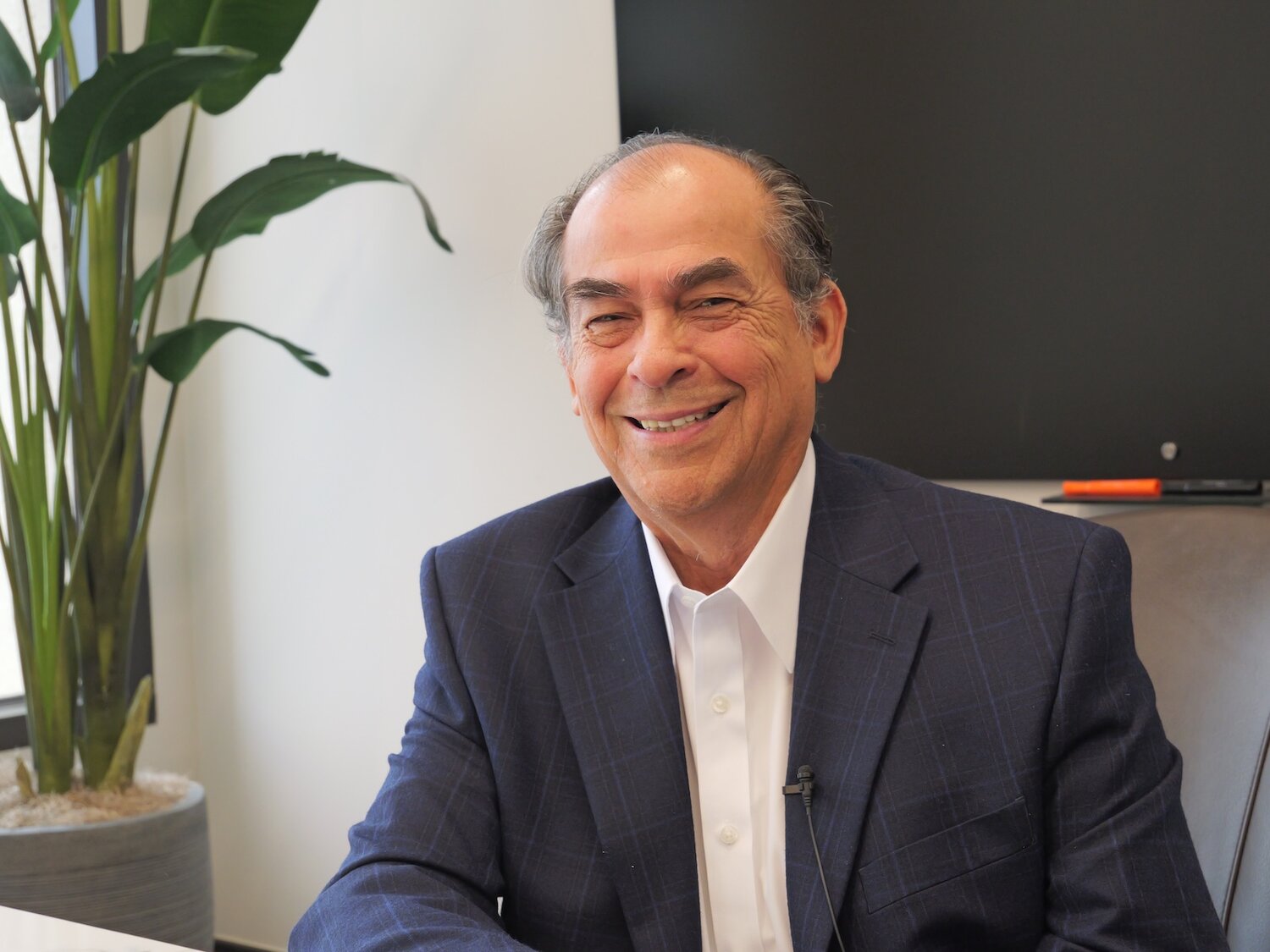
Editor’s Note: The above commentary was penned by Mario Reyna, executive director of RioPlex. The commentary appears in the RGG Business Journal with the permission of the author.


