


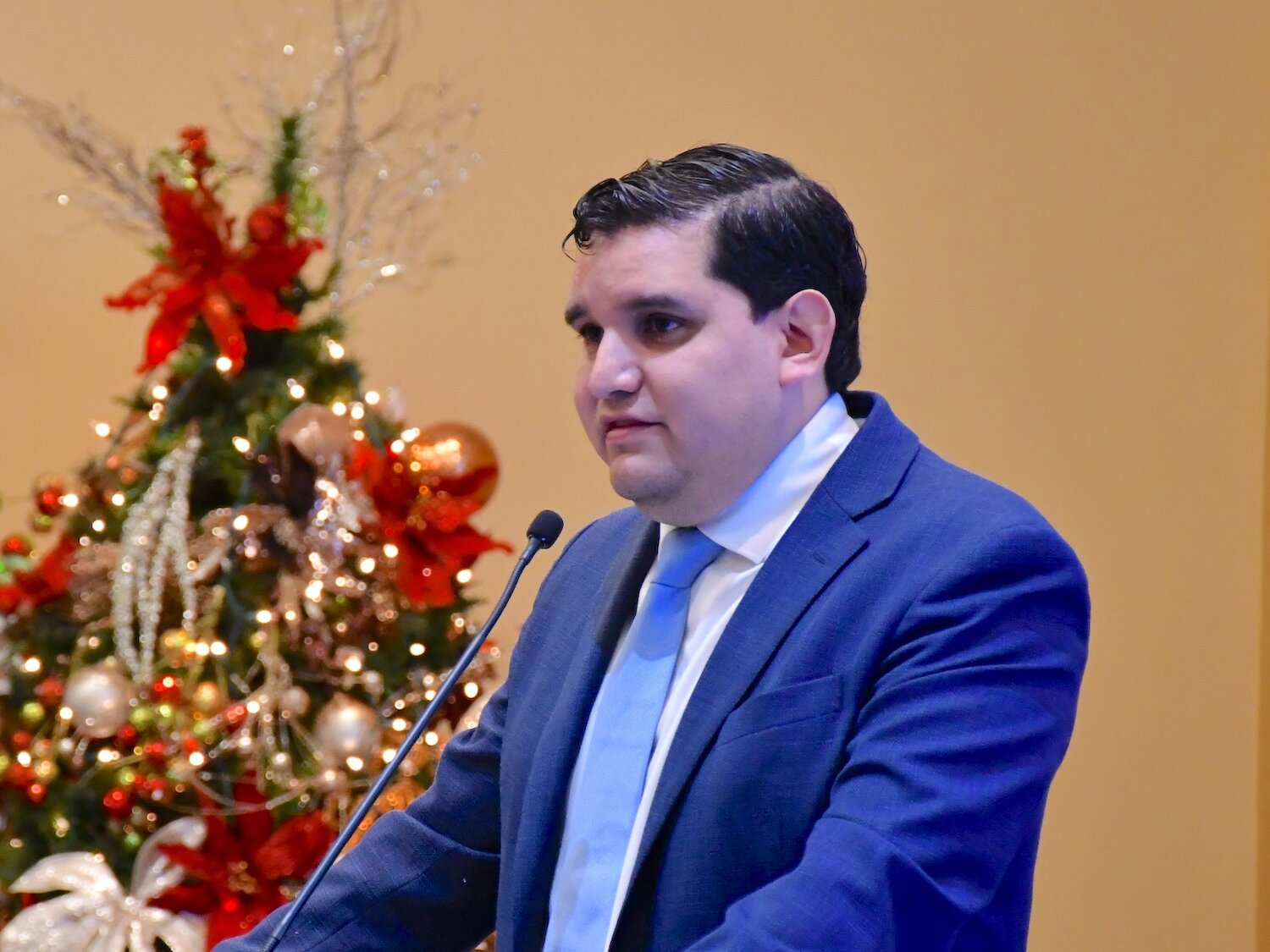
MCALLEN, Texas - Sergio Vasquez, border program manager for the international trade and border planning team at TxDOT, has given a detailed update on the Border Transportation Master Plan.
Vasquez gave the update at a recent meeting of the Texas Freight Advisory Committee.
“The current adopted BTMP was adopted by the Texas Transportation Commission back in 2021 and what it did is it identified current and future transportation needs, challenges and opportunities for moving people and goods,” Vasquez said, in his introduction.
“Based on the needs and challenges identified back in 2021 it outlined 22 policies, 153 programs and 661 project recommendations throughout the Texas-Mexico border and identified a total $37.4 billion funding need and total project cost.”
Vasquez said BTMP also helped TxDOT facilitate coordination and collaboration between Texas and Mexico. “It was the first truly binational plan,” he explained.
Of the 661 project recommendations, many were consolidated due to duplication, Vasquez said. “So that number right now stands at 632, with 530 of those projects being in the state of Texas. 300 of those 530 projects were TxDOT-led projects, with 57 being completed or under construction and 29 being in the implementation phase.
“When it comes to funding allocation, that's around $140.5 million worth of completed projects that were done through the (TxDOT) border districts, with $1.75 billion that is under construction, and around $3.6 billion that are fully funded based on the projects that were identified back in 2021.”
Around 230 were non-TxDOT projects, Vasquez reported. These include projects undertaken by municipalities, MPOs, and the private sector. “Of those 230 projects, 30 are completed or under construction and 117 are in the implementation phase.”
Vasquez continued: “As I mentioned, this plan was truly binational, so there were some priorities identified by our Mexican counterparts. “Of those 632 projects, 102 were in Mexico, with 53 being in the State of Chihuahua, 12 in Coahuila, four in Nuevo Leon, 10 in multiple regional states and 23 in Tamaulipas.”
Vasquez said there were around 153 program recommendations, with 46 identified as being led by TxDOT. One of these is the border wait time system that TxDOT is implementing. This provides real time data for pedestrians, for commercial motor vehicles, as well as privately owned vehicles.
Of the 46 program recommendations that identified TxDOT as the lead, 18 have been completed or have in-progress studies. “TxDOT has not only continued moving forward the projects, but also the program recommendations that came from 2021.”
Vasquez gave many reasons why the BTMP needs updating.
“We did this (plan) back in 2021, but the data was from 2019, and, as you know, sometimes the data is a little behind,” Vasquez said. “So, since then we have come through a pandemic, there have been key changes in key stakeholders. We have new policies and priorities. USMCA was negotiated back in 2023. We have seen re-shoring and near-shoring, technology deployments, and supply chain disruptions. All of this has led to an increase in transportation planning.”
Vasquez said the planned development approach is going to be conducted in four stages.
"We're in the early initial stages. We're in stage one. We’re in the process of developing the vision, mission, and supporting goals and updating that based on the 2021. We’re also evaluating existing and future conditions of the movement of people and goods. So, we're looking not only at the freight movement, but also the movement of goods, transits, pedestrians, bicyclists, not only at the border crossings, but also 60 miles from both sides.”
Once stage one is completed, Vasquez said, TxDOT will look at current and future needs, in stage two.
“We'll see what has changed, what projects that were listed back in 2021 is your priority, and come up with new priorities based on what has changed, and we'll begin identifying those projects, strategies and policies,” he explained.
“Stage Three will look at assessing those policies, strategies, programs and projects, and the last stage is documenting those findings, providing recommendations and creating an implementation plan.”


