


BROWNSVILLE, Texas — Cameron County has secured what officials are calling a historic, transformational economic development project, outperforming global competition to become the future home of Port Alpha, a next-generation $3.2 billion software-defined shipyard developed by defense technology firm Saronic.
Following months of intensive, multi-layered negotiations between state, county, and local economic partners, Cameron County leaders finalized a crucial 95 percent property tax abatement, sealing a deal that is expected to generate a staggering $160 billion in long-term regional economic impact and inject up to 10,000 direct jobs into the Rio Grande Valley workforce.
The highly advanced facility, designated for the production of autonomous maritime systems and software-driven naval production, represents a massive milestone for the deep South Texas border region. It comes at a critical geopolitical juncture as the United States aggressively moves to revitalize its domestic maritime industrial base and expand naval defense capabilities along the Texas Gulf Coast.
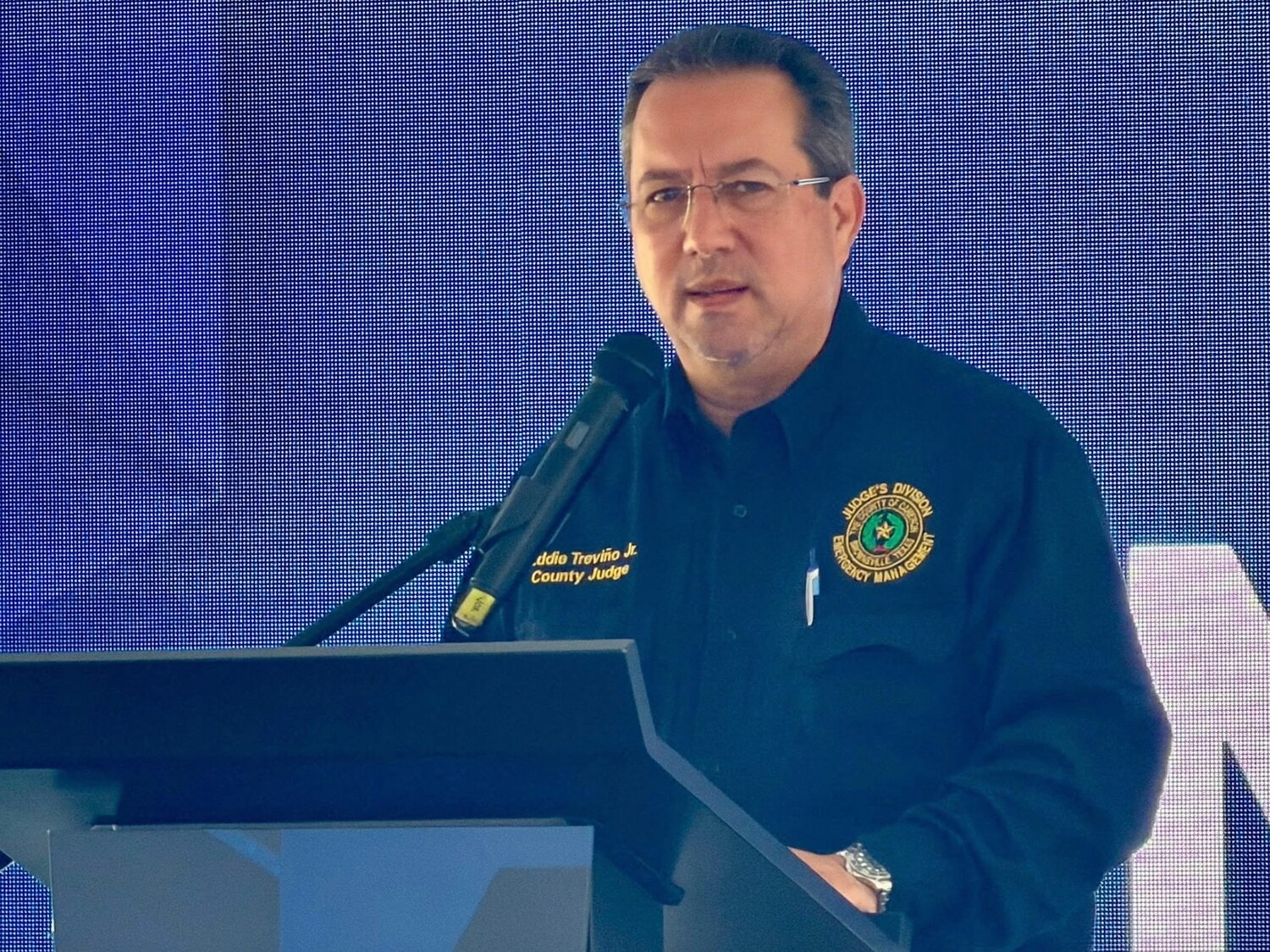
Cameron County Judge Eddie Treviño, Jr., said: “This project will help position Cameron County and the entire Rio Grande Valley at the forefront of the nation's maritime future. We've always known the tremendous potential our community has to offer, and we're proud that Saronic recognizes Brownsville and Cameron County as the right place to make this historic investment."
Judge Treviño emphasized that the sweeping benefits of the facility extend far beyond the immediate workforce expansion. "Beyond the thousands of jobs the shipyard will create, this project will generate economic opportunities that will benefit our residents, local businesses, and future generations for decades to come," Treviño added.
The workforce demand generated by Port Alpha will span a massive vertical array of skill levels, offering new economic mobility to regional workers. Employment opportunities will range from traditional skilled industrial trades—including specialized welding, precision machining, and heavy metal fabrication—to high-tech, high-wage careers in robotics engineering, software development, advanced automated manufacturing, and complex naval architecture.
To address the significant talent pool required, Saronic has formally committed to prioritizing local hiring pipelines. The defense firm plans to establish comprehensive workforce development frameworks and specialized training tracks in direct coordination with Rio Grande Valley educational institutions and regional workforce development boards.
The recruitment of Port Alpha highlights a highly disciplined, synchronized effort uniting Cameron County administration, the Office of the Governor, the State of Texas, municipal leadership, local economic development corporations, and public education entities.
Federal lawmakers are also praising the development as a crucial victory for both regional economic growth and domestic defense strategy. U.S. Senator John Cornyn noted that the scale of the investment directly aligns with pressing national security mandates.
“As threats from foreign adversaries continue to grow, I’m glad that Saronic has made a historic national security investment in our state by expanding their Texas presence to the Port of Brownsville. The Port Alpha Project will create up to 10,000 jobs in the Rio Grande Valley, strengthen our critical shipbuilding workforce, and grow the maritime industrial base along the Texas Gulf Coast,” Cornyn said.
Saronic’s autonomous technology has already achieved operational validation on the global stage. In June 2026, one of the company’s unmanned surface vehicles (USVs) successfully participated in a high-stakes rescue operation in the Middle East, assisting in the recovery of two downed U.S. Army helicopter pilots. The event underscored the vital role that autonomous maritime systems are increasingly expected to play in modern military and national defense operations.
Heavy construction on the state-of-the-art Port Alpha complex is scheduled to begin later this year, with full commercial and defense manufacturing operations projected to commence by 2028.


