


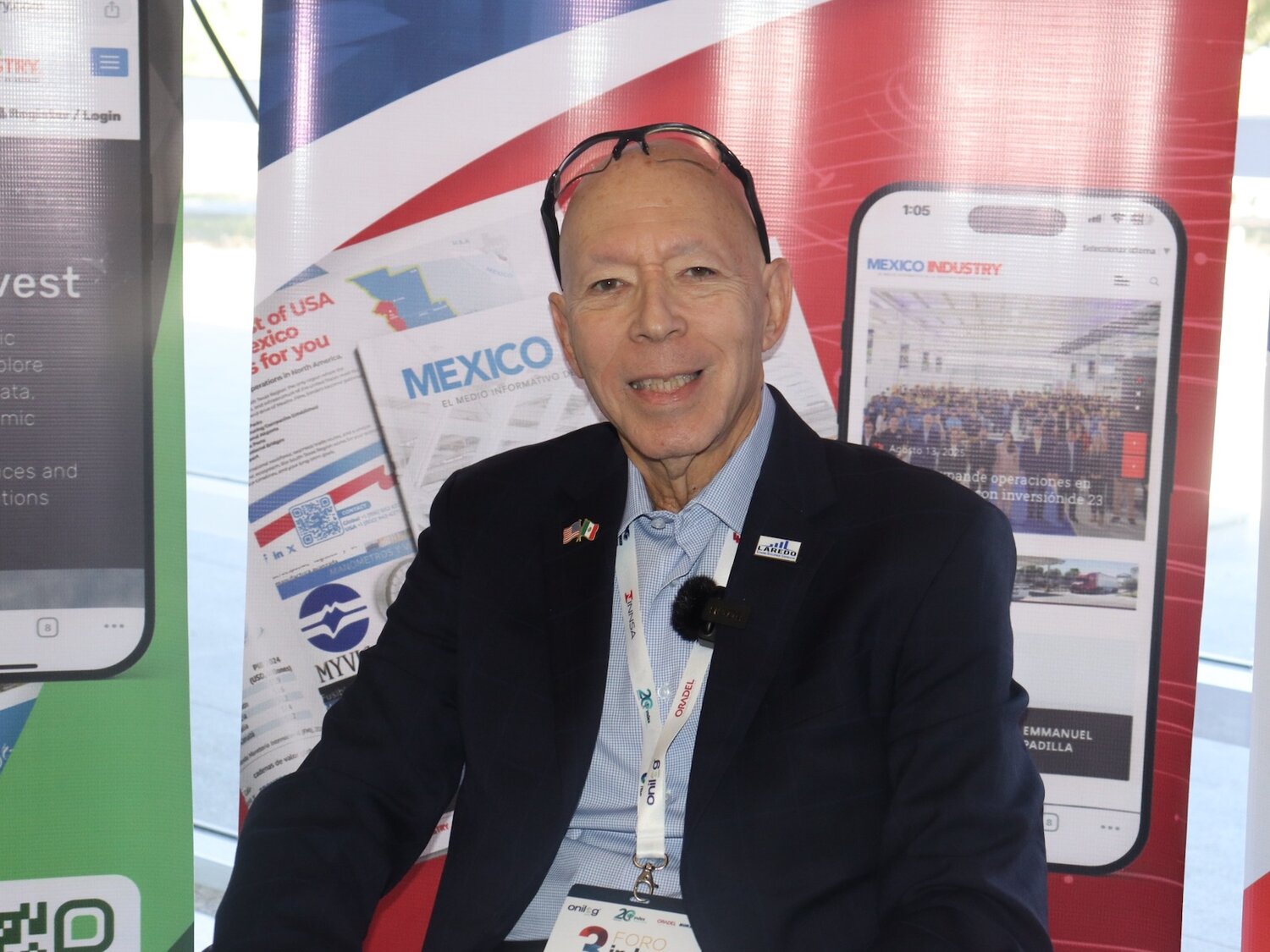
LAREDO, Texas - David A. Stedman, CEO of Laredo Economic Development Corporation, says that by deciding not to extend USMCA, the United States has institutionalized uncertainty.
After high-level meetings on July 1, the United States did not elect to extend the U.S.-Mexico-Canada Agreement for another 16 years. This was after Canada and Mexico had said they would.
Stedman made his comments in response to analysis by Daniel Covarrubias, director of Texas Center for Border Economic and Enterprise Development at Texas A&M International University in Laredo.
“Anyone who thought the Trump Administration would restore calm and go back to the old order was just fooling themselves,” Stedman said. “The good news is that USMCA is extended for ten years, subject to an annual review. By institutionalizing uncertainty, the Administration can reshuffle the deck on an annual basis. Anyone who read 'The Art of The Deal' can completely understand the new reality.”
Covarrubias responded to Stedman: by saying “Institutionalizing uncertainty” nails it. Covarrubias said: “The annual review is a recurring pressure point by design. The one thing that cuts the other way is that it's scheduled and legible: firms can see each cycle coming and build flexibility against it rather than get blindsided. It's pressure, but it's pressure you can plan around if you prepare early.”

Covarrubias gave his analysis on his Substack page, which is titled The Bridge. The title of his piece is: "USMCA Is Now a Year-to-Year Lease."
Covarrubias wrote: “The July 1 review didn’t end the agreement. It did something with a longer price tag: it made uncertainty annual. The bill lands on whoever builds next."
Covarrubias pointed out USMCA remains in force but is now subject to annual review until it's either renewed or expires in 2036.
“The explainers all land on the same reassuring point: the rules didn't change overnight. True,” Covarrubias wrote. “The numbers tell the rest: USMCA preference utilization jumped from 49.5% to 76.1% for Mexican goods and 35.5% to 78.7% for Canadian goods after the 2025 tariffs. Businesses certified in record numbers under rules that can now be reopened every year for a decade. Mexico's fixed investment has fallen for more than a year straight, with machinery and equipment spending down 9.7%. US-Mexico trade is at a record. Both things are true at once: existing plants keep shipping, while the next plant isn't built. Uncertainty stopped being a phase. On July 1, it became the operating system.”
Uriel Verazzi, a branch manager at SitePro Rentals wrote: “Great perspective, Daniel. Companies have always adapted to uncertainty. The question is where they’ll choose to build flexibility into their supply chains.”
Verazzi added: “We may be a little biased in Laredo, but for good reason. We’re seeing more conversations around distribution strategy, value-added operations, inventory positioning, and access to both U.S. and Mexican markets and labor forces. Those factors are becoming a much bigger part of the site selection discussion than they were just a few years ago. It will be interesting to see who makes the next long-term commitment, much like Toyota did decades ago.”
Luis E. Treviño, founder and director of Leon Translex said: “Sharp analysis, Daniel. ‘Good behavior bought exposure" captures it precisely. From where I sit at the legal-document layer, the annual-review cycle adds a quieter cost too. Every reopening of rules of origin means the underlying documentation (certifications, corporate records, contracts) has to be re-examined, re-issued, and often re-translated for counterparties and authorities on both sides. Compliance paperwork built for a 16-year horizon now lives on a 12-month clock.”
Treviño added: “As a fellow TAMIU alum, always glad to see the work you and the Texas Center are doing to put real data behind these shifts. Great piece.”
Covarrubias responded: “This is the layer the macro numbers miss. Thank you for it, Luis. ‘Compliance paperwork built for a 16-year horizon now lives on a 12-month clock’ is exactly right: every reopening of rules of origin means re-certification, re-issuance, and re-translation on both sides, and that recurs annually now. It's the paperwork version of the precarity premium.”
Jean-Paul de Kervor, of Baja California Industrial Real Estate Services, wrote: “Combined with downward pressure caused by the Super peso (or is it just a weak dollar?) Tijuana industrial vacancy has shot up about 10 percent. Interesting how it correlates so closely with your 9.7 percent reduction in Capital spending. The US side at Otay Mesa is also seeing vacancies rise. It’s not uncertainty anymore.”
John Woosley, a retired former district director with the U.S. Small Business Administration, said: “I don’t doubt that the uncertainty is a relevant issue but I think the exchange rate is a big factor as Jean Paul (de Kervor) says. Inflation is faster in Mexico than the US and a lot of specific costs, minimum wage, utilities, payroll taxes, etc., keep going up in pesos and then the peso strengthens against the dollar. It is a tough way to make a buck.”
Responding to the analysis of Covarrubias, Bernardo Alanis, an international business professor at Tecnológico de Monterrey, wrote: “Interesting to study, analyze and understand how this policiy change within the FTA will impact from differentes perspectives: economy, inflation, immigration, tax, all on the short term (less than a year). And how the three countries involved will adapt their policies around this short term.”
Covarrubias responded: “Agreed, Bernardo, and the short-term is the hard part. With the review now annual, each of those dimensions (inflation, tax, immigration) resets on a 12-month clock instead of a 16-year one. Governments will adapt reactively. The firms that do best build in flexibility ahead of each cycle rather than waiting for it to settle.”
Tony A. Ramirez, an economic development specialist in Grande Prairie, Texas, wrote: “The prolonged negotiation period adds friction and risk for long-term planning in North America's trade-dependent economy. The U.S. decision not to renew it in its current form may signal that major changes are likely on the way.”
Coavarrubias responded: Exactly, Toney. The friction is the cost even when nothing formally breaks. Planning long-term based on an annually reviewed agreement is like planning against a moving target, and you're right: the non-renewal signals more change ahead. That's the argument for staging commitments and keeping options open rather than betting big on any single outcome.”
Editor's Note: To read the full analysis, go to Dr. Covarrubias’ Substack page, called The Bridge.


