


Everybody's heard about the (South Padre Island) 2nd Causeway Project. That goes hand in hand with all the employment that will occur in the Cameron County area in the next ten years or so.
That is a huge project that Governor Abbott has committed to. TxDOT is committed to that as well. Even though these projects are all in Cameron County, they are important to the whole Rio Grande Valley, to Hidalgo County, to Willacy County and to Starr County. It is important that we have that connectivity. Because without that connectivity, we will not have the growth that we need to have, and we will not be able to reap the benefits that we that we can reap.
When we started the environment process for the 2nd Causeway Project, I had to physically send a letter to all the different property owners that would be impacted by the project. Believe it or not, the vast majority of those letters were to property owners that lived in Hidalgo County. So on any given day of any given weekend, bulk of the traffic to South Padre Island comes from Hidalgo County. So connectivity is key.
And I am going to go out on a limb right now, and I am gonna say something that perhaps might come back and haunt me. But it's the right thing to say and it is the right thing to do. And then at the end I've got an assignment for Paco, and the Rio Grande Valley Partnership.
So, TxDOT contracted the Texas Transportation Institute (TTI) years ago to do a study on the value of commodities. They took two areas in the state of Texas. One area was served by an interstate corridor system, and the other one was not. So the area that was served by an interstate corridor system was Laredo. The area that was not served by an interstate corridor system was the Rio Grande Valley. And to this day, the Rio Grande Valley is the largest metropolitan area in the United States without an interstate corridor. So the study came back, and the value of commodities going to an area with interstate connectivity is four-to-one. So for decades, the Rio Grande Valley has been economically deprived because of the lack of proper infrastructure not coming into the Rio Grande Valley.
We have a prime example again today, where history is repeating itself. TxDOT started working on a connectivity project that was a component of the 2nd Causeway project. They call that project the I-69 Connector. It would connect the Edinburg-Pharr-Mission-McAllen area to South Padre Island. Eventually, the first phase would be to connect north of Harlingen in Cameron County. Well, I've been told that that project has been placed on hold. Was not given a reason. Just that it's been placed on hold. That is not a good thing at all. Because, again, just like Cameron County, Donna, the Port of Harlingen, the City of McAllen, the City of Mission, and every other entity in Hidalgo County, Willacy County, Starr County are working on their infrastructure projects with that in mind: ahat we have that connectivity on the north end. And yet TxDOT is in a different page and placing a project of that significance on hold.
So I do not think we should wait. The assignment to the Partnership is that perhaps you get the four counties together and see how the four counties can take on that project, if TxDOT does not want to take it on. So I will leave it that.
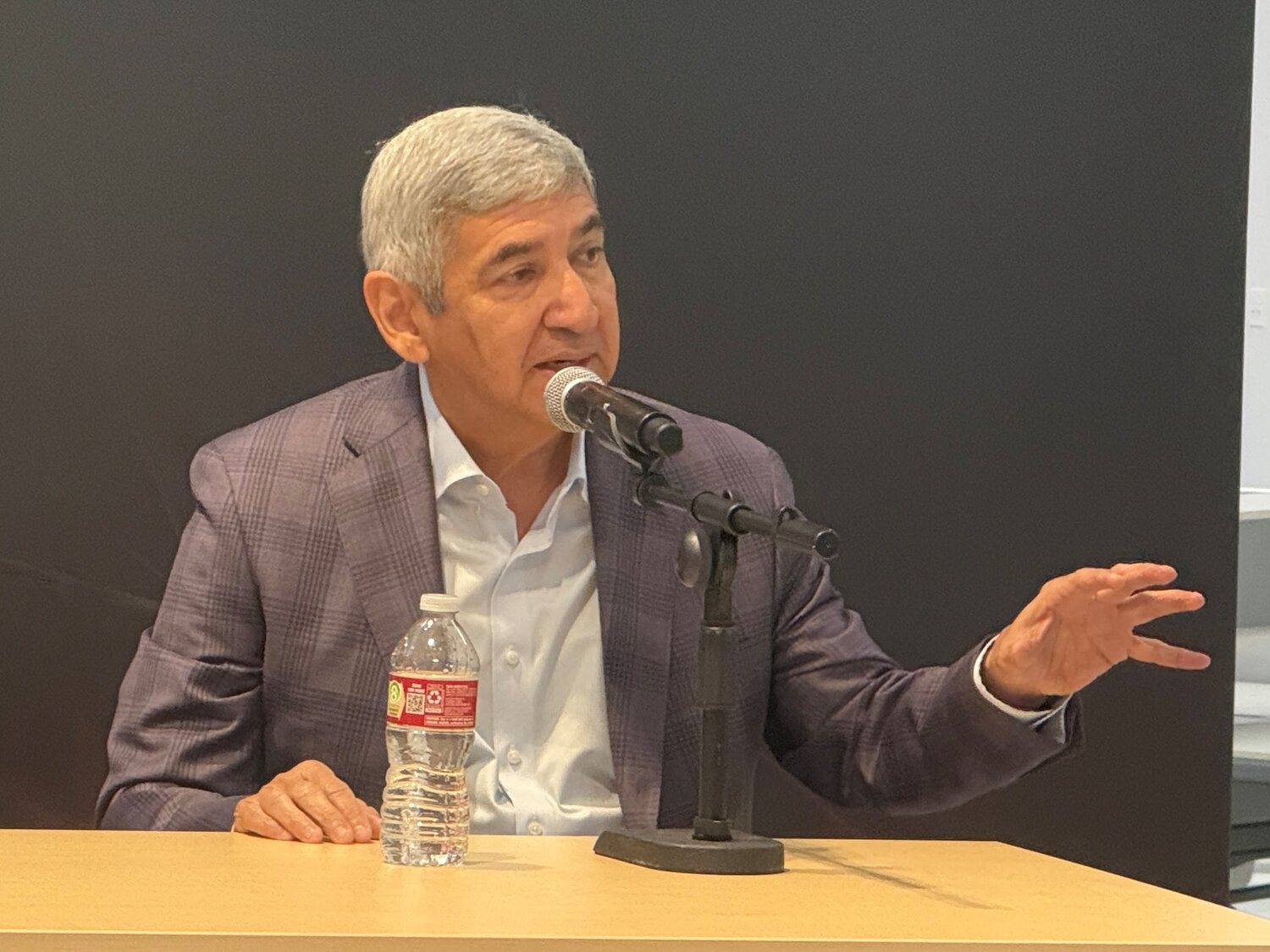
Editor's Note: The above remarks were made by Cameron County Administrator and Cameron County Regional Mobility Authority Executive Director Pete Sepulveda, Jr., when he appeared on a panel discussion about trade and transportation. The event was hosted by the Rio Grande Valley Partnership and held at the Center for Education & Economic Development in Mission.tnersh
Editor's Note: Here is a video recording of Pete Sepulveda's remarks about the I-69 Connector project:
here is some text


