


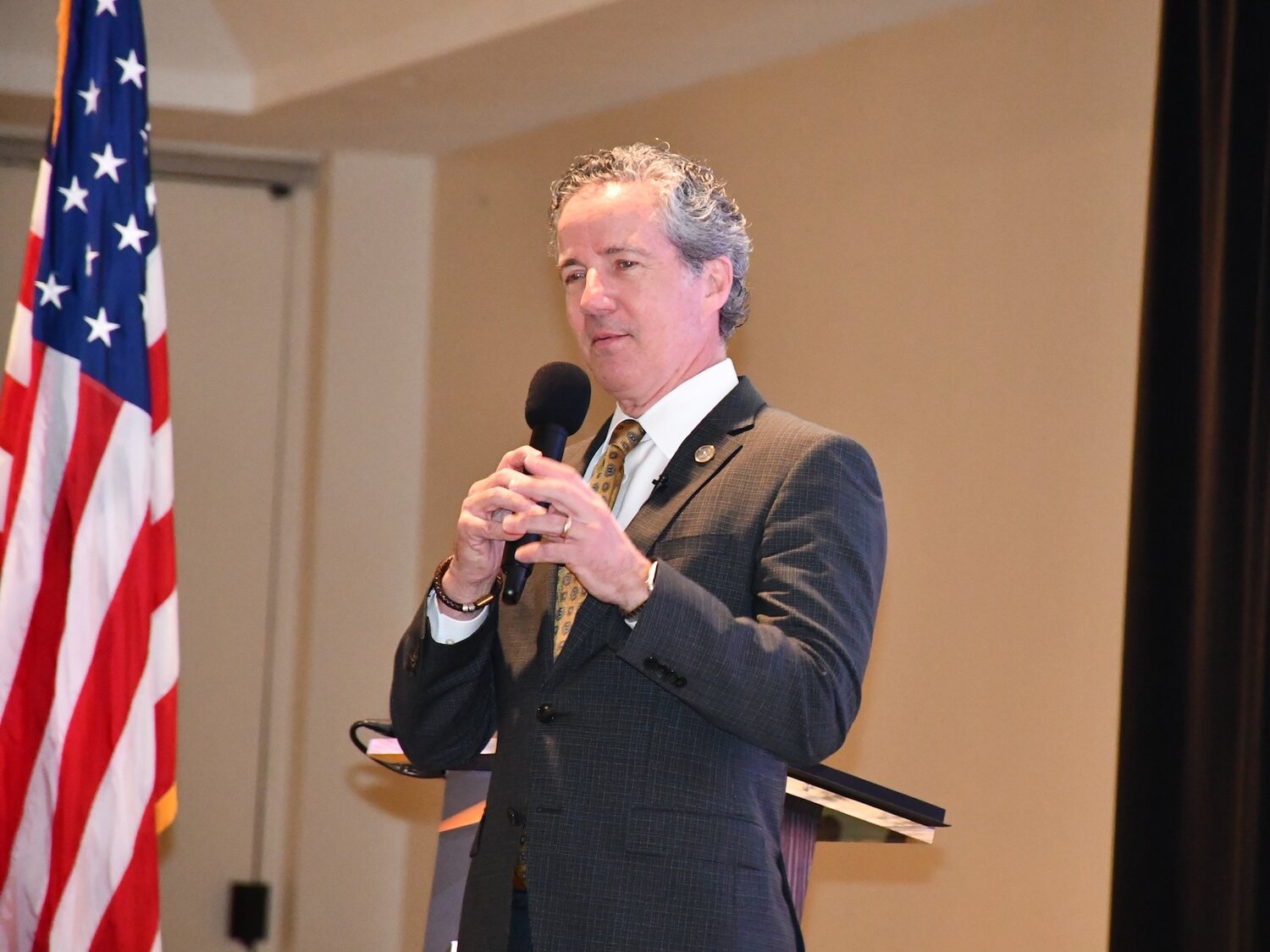
BROWNSVILLE, Texas - Acting Texas Comptroller Kelly Hancock says he is not concerned about the amount of electricity needed to power big data centers. But water, that is another thing.
Hancock was the keynote speaker at a Texas Talks luncheon hosted by Brownsville Chamber of Commerce. His presentation was titled Fiscal Futures Briefing. The event took place at the Brownsville Events Center.
In the Q&A portion of the event, Hancock was asked whether Texas could handle all the data centers being proposed.
“That's a great, great question,” Hancock said. “Water is a huge concern of mine. I was vice chair of the Water & Ag Committee (in the Texas Senate), and so water is a huge concern of mine. And while we invested in it, the legislature, I think it's got to be significantly more."
"The more you invest upfront, the less it's going to cost you over the long haul. So, I think we're going to have to continue to invest there, and we're going to have partnerships with it.”
Hancock said the City of Brownsville deserves praise for investing in a desalination unit.
“We need everybody to recognize; we’re going to have to look at all options when it comes to water. We have abundance of water in certain parts of the state, so it is (all about) moving that water around. So, water, that is a great concern for me.”
But electricity supply is another matter, he said.
“The energy market is very different. It is a market. When we had the huge freeze… I love history, and like the last time we had a freeze like that was when Santa Ana was at war and lost livestock… back in the 1800s. So, a freeze like that is rare, every 200 years or more. But because it is market, it allows you to grow because the energy is coming.”
Hancock continued: “The data centers, they have to run 24/7. The AI ones can gear down a little bit, but the others have to run 24/7. They want a guarantee they're going to have the energy. So, what is happening?”
To answer this, Hancock referenced the big Stargate project in Abilene. It is a massive 4-million square-foot, $500 billion AI data center campus spearheaded by OpenAI, Oracle, and Crusoe. It is designed to support 200-plus megawatts of IT capacity.
“I was up at Stargate, up in Abilene. What's happening is, when they come, other investors are signing contracts to provide that energy. And so, there's three gigawatts going in next to Stargate… that will supply enough energy for them. But also, when they're building this as additional generation… since the winter storm we have over 30,000 additional megawatts, 30 gigawatts, which basically would have taken care of Texas 15 years ago. That's how much that is. It's enormous. Additional capacity that's already come in.
“But as these (data) centers come, they're bringing their own generation, and as they're bringing that generation, those investors doing the generation are building more capacity than that data center needs, which they can sell it to us.”
Because electricity is a market in Texas, the private sector can adapt more quickly, Hancock argued.
“Because we are a market, that's our own grid, and we're able to move very, very quickly because we're not connected to the federal grid. So, we're actually in a much, much better position today than we've ever been. You know, we never had any warnings or anything with this last freeze that we had, and that's going to continue because of our market structure.”
Hancock also referenced Super Micro Computer, Inc., an American information technology company based in San Jose, California.
“Super Micro puts together these racks and needs energy. But in California, literally, you have to ask the government if you can get energy from them, because it's fully regulated. Businesses are hampered by that, and when I shared with them how we operate, they went from saying they’re going to move one facility here to, we're going to move five here. I told them, all you have to do is contract with somebody that will build a facility and supply.”
Hancock added: “Water is an issue, but electricity, I'm not nearly as concerned with because I trust economic, market dynamics, more than I trust government. And so, it works in the energy, space. Water? We’ve got to work on. It's a major, major, major issue.”


