


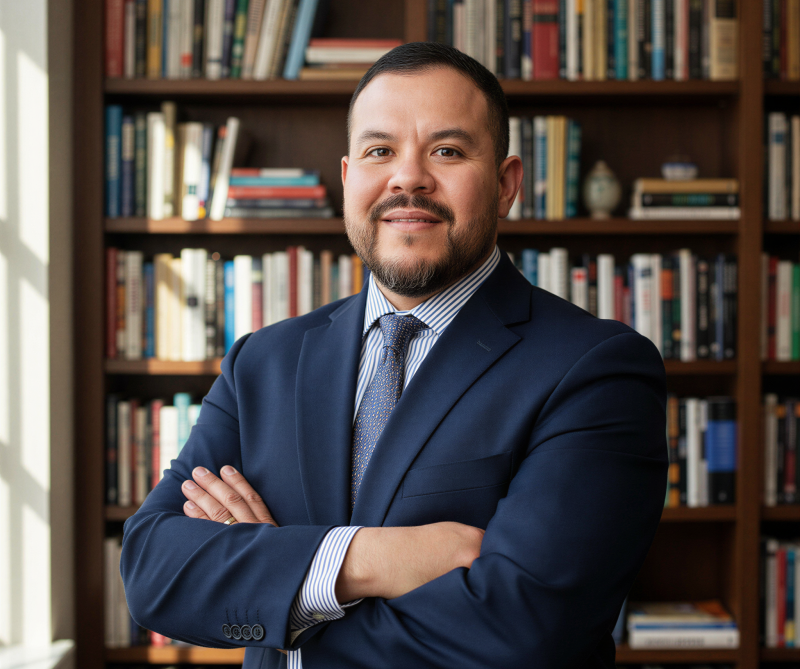
BROWNSVILLE, Texas - Brownsville’s chief information officer says a decision by the Texas Broadband Development Office to invest $21.9 million in the city’s blazing-fast fiber internet service is transformational.
Soon after learning the news, Jorge Cardenas told the RGG Business Journal: “We are incredibly proud to receive this $21.9 million investment, which represents a transformational moment for Brownsville, Cameron County and our region.
“These funds will allow us to build 138 miles of fiber infrastructure, expanding high-speed connectivity to more than 17 communities.
“This is more than a technology project—it is an investment in education, economic growth, public safety, and opportunity for every resident.
“We are building the foundation for the future and ensuring that no community is left behind.”
The Texas Broadband Development Office (BDO), which is administered through the Texas Comptroller’s Office, awarded more than $113 million in grants under the Texas Middle Mile program. The program aims to expand broadband availability, strengthen network resiliency, enhance affordability, and support public safety and emergency preparedness.
Brownsville’s grant was the second highest awarded. The total cost of Brownsville's middle mile project is $23,426,016. It has been awarded $21,926,016 by BDO. This represents around 93.6 percent of the total cost. The funding will allow it to add another 138 miles of fiber in Cameron County.
The Brownsville project is a public-private partnership with Omni Fiber adding what is known as the last mile.
In a recent podcast with the RGG Business Journal, Cardenas said the City of Brownsville had applied for funding to expand its lightning-fast fiber internet. He said he hopes the service will eventually be available as far north as Harlingen.
“The goal is not just to cover Brownsville. We want to influence and be part of the growth of the region,” said Cardenas, on a podcast with the RGG Business Journal.
Thus far, the city has installed 100 miles and 576 strands of fiber across Brownsville.
Brownsville started work on its city-wide fiber internet service during Trey Mendez’s term as mayor. The city carved around $91.5 million from left over ARPA (American Rescue Plan Act monies and formed a public-private partnership agreement with Lit Communities. Under the plan, the City of Brownsville would build rings of fiber around the city while Lit would cover the “last mile.”
Lit merged with Omni Fiber in late 2024 and Brownsville residential and business customers that want the service sign up with Omni.
Cardenas said the arrangement is like the connectivity of a highway and a city road.
“The main highway, or the expressway, takes you from point A to point B. But you need those small roads, the arteries, to take you to you your location. Same thing here. We (the city) built the main roads, the fiber network infrastructure. Now, Omni is bringing that fiber to the home so that the residents of Brownsville, can get a faster, more reliable, and cheaper connectivity.”
Asked how many households and businesses have signed up for Omni in Brownsville, Cardenas said around 7,000 so far. Asked how fast the service is, he said:
“It's a great question. So, the service can go from 100 megabits per second to as high as 100 gigabits. The typical home, a family of, say, six people, you don't need internet faster than 50 megabits per second, up and down, download and upload. That's more than enough to run your cell phones, your TV. But a business nowadays needs at least ten gigabits of bandwidth, and as the time goes by, it's going to go to 25, 50, and 100.
Cardenas said the City of Brownsville, working with Omni, can provide this.
Cardenas had experience working as a master instructor of fiber optics around the world while serving in the U.S. Marines. He joined the City of Brownsville in 2022 and was soon asked to develop the fiber internet project.
“When I got here, we redesigned the whole infrastructure. We stretched the coverage area. We were covering about 80% of Brownsville’s main areas, about 80% of the entire city limits,” he said.
“But Brownsville has these other communities, towns attached to it or next to it, like Olmito, Rancho Viejo, Los Fresnos. So, we took our fiber and we extended that last ring to extend past Brownsville and get to Olmito, Rancho Viejo and Los Fresnos. Why? Because we want to make sure that our other communities thrive as well.”
Asked what the feedback has been, Cardenas said:
“I can tell you, it is making a big impact. Just yesterday I was at Rancho Viejo, and I saw a crew from Omni working in the area. They were like, yeah, we’ve pretty much got this whole area covered with our fiber. So, I think, the community is happy. They see the dollars that are at work, but probably they don't know that they came from the city.
“So, that is why we're here, right, to tell that story about what Brownsville is doing. We want to make sure that other cities get what we have.”
Asked if the fiber internet could eventually reach cities like San Benito or Port Isabel, Cardenas said:
“That's a great question. I can tell you we have already looked into that. We have applied for a grant that will… the goal is to attach that last ring of Brownsville’s, over there in Rancho Viejo, and take the fiber down 281 to Los Indios, then up to San Benito, and go up to all the way to Bayview, Port Isabel, and South Padre Island. And then down that LNG corridor (at the Port of Brownsville). That right there would touch about 17 additional communities. There would be an additional 55,000 to 60,000 people that would be affected positively by us bringing fibre to those communities.”
To do this, a federal or state grant would be needed, Cardenas confirmed.
“Obviously, the City of Brownsville… we definitely need to take care of what is happening in-house (first). But by applying for a grant, showing the state and federal government that Brownsville is thinking bigger than just Brownsville… we want to think about the region. And so, yes, to your point, we are trying to get all the way up there.”
Asked if the leadership in cities like San Benito are excited, Cardenas said:
“We have had conversations, and they were received it very well when we told them, but obviously, the work needs to be done. We have submitted the application (for the grant). We should hear back very soon. So, when I talked to those communities, they were receptive and happy. They had a lot of questions. How is this going to change my town? How is this going to affect me in a positive way? I can say it would be very, very impactful.”
Asked if the fiber service could even reach as far north as Harlingen, Cardenas said:
“I think Harlingen has some fiber of their own, some (private) companies are kind of migrating or moving there from McAllen down this to this area. But I hope that once we get that grant and we expand our fiber coverage, we can work with other communities, work together to expand our range. And not to the benefit of Brownsville, but to the benefit of the region. We all see and hear a lot in the news about how fast the Rio Grande Valley is growing. It is only matter of time before we're going to need more bandwidth, more fiber.”
In a press release issued via the Comptroller’s Office, BDO announced it was awarding more than $113 million in grants under the Texas Middle Mile (TMM) Program.
The BDO said the awards “represent a major investment in strengthening the broadband backbone that supports connectivity across Texas. This will help advance the state’s goal of expanding reliable, high‑speed internet access to all Texans.”
The press release points out that the Texas Legislature allocated $1.5 billion to the Broadband Infrastructure Fund in 2023 to support major broadband expansion initiatives statewide. From this funding, up to $200 million was dedicated to the TMM Program, which focuses on expanding critical middle‑mile infrastructure that connects backbone networks to last‑mile providers.
The TMM Program aims to:
• Expand broadband availability by addressing infrastructure gaps in rural and underserved regions to support last‑mile broadband deployment and improve service options for Texas communities.
• Strengthen network resiliency by investing in scalable and future‑proofed infrastructure designed to withstand weather‑related and environmental risks, ensuring continuous and stable service.
• Enhance affordability by encouraging open‑access, cost‑efficient networks that foster competition among providers and create long‑term affordability for consumers.
• Support public safety and emergency preparedness by expanding infrastructure that can support early flood‑warning systems, improve emergency communications and enhance statewide disaster resiliency.
The BDO added: “Middle mile infrastructure plays a foundational role in enabling high‑capacity, high‑speed connectivity and ensuring network resiliency. The awarded projects will strengthen Texas’ statewide broadband foundation and further ensure all Texans have access to high-speed internet.”


